North Carolina
Selling a junk car in North Carolina
North Carolina wants a notary. Your signature on the title has to be notarized, so line one up before the tow truck comes.
Cars 12 model years or older can go for scrap or parts without a title. You show a photo ID and sign that the car is yours, old enough and free of liens, and the yard checks NCDMV's system to make sure it is not reported stolen.
The plate stays with you. Turn it in before you cancel insurance, or NCDMV fines you for the lapse.
The title
North Carolina yards need the title with your signature notarized, unless the car is 12 model years or older and sold for scrap or parts with your photo ID and signed statements.
- Vehicle 12 model years old or older sold only for scrap or parts to a secondary metals recycler or salvage yard: show a valid photo ID (an NCDMV driver license or ID card, or another government photo ID; the State Highway Patrol says out-of-state IDs are accepted), sign the yard's statement that you have the lawful right to sell, that the vehicle is at least 12 model years old and that it has no security interest or lien, and sign a statement that it will be scrapped, crushed or dismantled for parts only.There is no NCDMV form for this. The yard copies your ID, keeps the statements and checks the vehicle in the NC Scrap Vehicle Reporting System before it pays. Without an ID the yard cannot buy the car (North Carolina General Statutes Section 20-62.1).
- Scrap that is no longer a vehicle: North Carolina General Statutes Section 20-62.1(e) does not treat a vehicle that has already been mechanically flattened, crushed, baled or logged and is sold for scrap metal only as a motor vehicle, so the no-title rules do not apply to it.A whole car you bring to the yard is still covered by the rules above.
Bring to the yard
- If you have a North Carolina title, fill in the seller section on the back: the buyer's name and address, the date of sale, your signature and hand-printed name, the odometer reading if required, and the damage disclosure.Sign it in front of a notary, because NCDMV requires North Carolina titles to be notarized when ownership is transferred. Out-of-state titles follow the issuing state's rules.
- Line up a notary before you go if the yard does not have one.License plate agencies charge at most $9 for one signature, $10 for two and $11 for three or more, and notary fees must be paid in cash.
- If the title lists more than one owner, NCDMV requires every owner's signature to be notarized and accompanied by a black-and-white copy of the other owner's valid driver license or ID.A Power of Attorney (MVR-63) can sign instead, with a copy of the owner's license.
- Bring a valid photo ID such as your driver license or a state or federal ID.A yard buying a car without a title must copy it, recyclers must copy the ID of anyone delivering metal to them, and with no ID the yard cannot complete the purchase (North Carolina General Statutes Sections 20-62.1 and 66-421).
- If the title shows a lien, bring the lienholder's lien release, which NCDMV lists as a required document whenever a lien is shown on the title.If the lien was electronic, the lender must send NCDMV an electronic release within seven business days of payoff, and NCDMV mails the paper title to you (North Carolina General Statutes Section 20-58.4).
- Disclose the mileage on the title or on an Odometer Disclosure Statement (MVR-180) unless the vehicle is exempt.The current MVR-180 (Rev. 04/26) exempts model year 2010 and older vehicles at 10 years of age and newer models at 20 years of age, so a model year 2011 or newer vehicle still needs a mileage reading in 2026.
- Complete the damage disclosure on the title or on a Damage Disclosure Statement (MVR-181).The questions about damage over 25 percent of value and about recovered theft apply to vehicles five model years old or newer. The questions about salvage, flood and reconstructed history apply to all model years.
- Selling a car 12 model years old or older without a title: sign the yard's ownership, age and no-lien statement and its scrap-or-parts-only statement, then wait while the yard checks NCDMV's online system to confirm the car is not reported stolen (North Carolina General Statutes Section 20-62.1).
- Take your license plate off before the car leaves.In North Carolina the plate stays with you, and you either move it to another vehicle you own or turn it in to NCDMV.
- Ask for a receipt.NCDMV lists a bill of sale only for vehicles bought from a dealer and has no bill of sale form number for a private sale, but secondary metals recyclers must issue a receipt signed by the person delivering regulated metals property (North Carolina General Statutes Section 66-421).
After the car leaves
| Step | Form | Deadline | Fee |
|---|---|---|---|
| Turn in your license plate unless you are moving it to another vehicle you own.Return it at any license plate agency or mail it to NCDMV Vehicle Registration Section, Renewal, Title and Plate Unit, 3148 Mail Service Center, Raleigh, NC 27697-3148. Ask for a receipt; NCDMV gives receipts on request at agencies and by mail, but not for plates left in the Raleigh drop box. | No form to return a plate. If the plate is lost or stolen, file the License Plate Turn In Verification (MVR-18A). | Immediately, according to NCDMV, and before you cancel your liability insurance. | NCDMV lists no fee to turn in a plate. Moving the plate to another vehicle costs $25.50 (license plate transfer fee), and you must keep liability insurance on both vehicles. |
| Cancel your liability insurance only after the plate is turned in.NCDMV says canceling insurance before returning the plate results in a fine for failing to keep continuous coverage. | No form | After the plate is surrendered. No other deadline is set. | No fee to cancel. If insurance lapses while the plate is still active, the civil penalty is $50 for a first lapse, $100 for a second and $150 for later lapses within three years, plus a $50 restoration fee (North Carolina General Statutes Section 20-311). |
| Answer any liability insurance termination notice NCDMV sends you.If the car was sold or transferred within 10 days after coverage ended, was not driven during the lapse because it would not run or was no longer yours, and the plate was returned (or a lost, stolen or destroyed plate was reported), say so in your response to avoid the penalty. | Your response to the NCDMV notice; License Plate Turn In Verification (MVR-18A) if the plate was lost or stolen | 30 days from the date printed on the notice for notices covered by the change NCDMV says took effect October 1, 2026 (earlier notices allowed 10 days). | No penalty if North Carolina General Statutes Section 20-311(a)(5) applies. Otherwise $50, $100 or $150 plus the $50 restoration fee, and NCDMV may revoke the plate. |
| If the car still shows on your NCDMV registration record after the sale, file an affidavit asking NCDMV to cancel the record.It lists the sale date, the buyer, the title number and whether any lien was released. | Affidavit for Removal of Registered Vehicle from Vehicle Registration Files (MVR-46F), notarized | None stated by NCDMV. | No NCDMV fee is stated on the form. Notary fees at license plate agencies are up to $9 for one signature, cash only. |
| Let the yard handle the title.NCDMV's forms list has no seller notice of sale. A yard that buys a car to dismantle must send the title, registration card and other proof of ownership to NCDMV before dismantling it, and NCDMV may then cancel the title record (North Carolina General Statutes Sections 20-61 and 20-62.1). | No form for the seller | No seller deadline. Section 20-61 requires the yard to send the paperwork before the car is dismantled or wrecked. | None stated |
Plates
North Carolina plates stay with the owner, not the car. When you sell or scrap a car and are not moving the plate to another vehicle you own ($25.50 transfer fee), NCDMV says to surrender it immediately at a license plate agency or by mail, and to do it before you cancel your insurance to avoid lapse penalties of $50 to $150 plus a $50 restoration fee. If the plate is lost or stolen, file a License Plate Turn In Verification (MVR-18A).
Lost title
The registered owner applies; the lienholder can apply alone if the title was lost while it held it. Mail the notarized MVR-4 to NCDMV, 3148 Mail Service Center, Raleigh, NC 27697-3148, or take it with your ID to a license plate agency. Every duplicate request must wait 15 days before NCDMV processes it, and NCDMV says title applications take 10 to 15 business days; with an instant title you pick up the duplicate at the same agency on the 16th day. If a lien is recorded, NCDMV mails the duplicate to the first lienholder unless you submit a lien release. While a loan is open, the lender keeps the title, or NCDMV records the lien electronically and does not need to issue a paper title until the last lien is paid (North Carolina General Statutes Section 20-58.4A). After payoff, the lender must release an electronic lien within seven business days and NCDMV mails the paper title; a lender holding a paper title must sign a release and send you the title within the earlier of 10 days after you ask or 30 days after payoff (Section 20-58.4).
Application for Duplicate Title (MVR-4), signed in front of a notary and completed exactly as the original title. If a paid-off lien is still shown, include the lienholder's lien release (or the lienholder's affidavit on MVR-4). To clear a satisfied lien from a title you hold, use the Application for Removal of Lien from the Certificate of Title (MVR-8)., $25.50 for a duplicate title, including a duplicate with lien removal or with a correction; $92.25 for a duplicate title with reassignment; $126 for an instant title. If the original was never received, the title fee can be waived if the original is issued within 60 days of the duplicate request. Notary fees at license plate agencies are up to $9 for one signature, cash only.
Salvage and totaled
North Carolina General Statutes Section 20-4.01(33)d defines a salvage motor vehicle as one whose repairs (parts and labor) to make it safe for public roads would exceed 75 percent of its fair retail market value (NADA guide or another approved publication), whether or not an insurer declared it a total loss; the definition has no model-year limit. Insurers must declare a total loss when damage, including supplemental claims, equals or exceeds 75 percent of the pre-accident actual cash value (11 NCAC 04 .0418). The insurer, not the owner, starts the paperwork under Section 20-109.1: if you give the car to the insurer, you assign the title to it and it sends the title to NCDMV within 10 days; if you keep the car, you complete the insurer's owner-retained form when the claim is paid, the insurer sends it to NCDMV within 10 days, and NCDMV notes the salvage status on its records. Titles of insurer total losses are marked TOTAL LOSS CLAIM, and once a title is branded every later title keeps the brand (Section 20-71.3).
Title brands: Salvage: repair costs (parts and labor) to make the vehicle safe for the road would exceed 75 percent of its fair retail market value, whether or not an insurer totaled it (Section 20-4.01(33)d). NCDMV calls these salvage (blue) titles., Total Loss Claim: the title and registration of a vehicle declared a total loss by an insurer licensed in North Carolina are marked TOTAL LOSS CLAIM (Section 20-71.3(a1))., Salvage rebuilt: a salvage vehicle that has been rebuilt for title and registration (Section 20-4.01(33)e)., Reconstructed: a vehicle materially altered from its original construction by removing, adding or substituting essential parts, including glider kits and custom assembled vehicles (Section 20-4.01(33)c)., Flood: a vehicle submerged or partially submerged in water to the point that the body, engine, transmission or differential was damaged (Section 20-4.01(33)a)., Non-U.S.A. vehicle: a vehicle made outside the United States and not intended by the manufacturer for sale in the United States (Section 20-71.3(a))., Junk: a vehicle that cannot be operated on the highways and has no resale value except as parts or scrap. It cannot be titled or registered in North Carolina (Sections 20-4.01(33)f and 20-71.3(g))., Inoperable title: NCDMV issues an Inoperable Title on a bonded title application when the vehicle is not operable at inspection, and it will not register the vehicle until it is deemed operable and an operable title application is filed..
What the yard has to do
- No-title purchases: a secondary metals recycler or salvage yard may buy a vehicle without a title only if it is 12 model years old or older and is bought solely to scrap or dismantle for parts (North Carolina General Statutes Section 20-62.1(a)).
- Seller ID and statements: the yard must get a government photo ID and keep a copy or scan, the seller's signed statement (lawful right to sell, at least 12 model years old, no security interest or lien) and a statement that the vehicle will be scrapped, crushed or dismantled for parts only.With no ID it must not complete the deal (Section 20-62.1(a)).
- Stolen check: before buying, the yard must check with NCDMV through its online system whether the vehicle is reported stolen.If it is, the yard must not buy it and must report the vehicle's location and the seller's identifying information. If NCDMV says it is not stolen, the yard is not liable if it later proves stolen unless the yard knew (Section 20-62.1(a)).
- Records: the business name and address, who entered the data, the date, year, make, model and VIN, the price, the seller's name, address and license number, the ID copy, the statements and the stolen-check record, kept at least two years and open to law enforcement inspection whenever the business appears to be open (Section 20-62.1(a) and (b)).
- NMVTIS: report each vehicle bought under Section 20-62.1 to the National Motor Vehicle Title Information System within 72 hours after each day's close of business, directly or through a third-party consolidator (Section 20-62.1(a1)).
- Title paperwork: yards that buy vehicles to dismantle must comply with Section 20-61, which requires the title, registration card and other proof of ownership to be sent to NCDMV before a vehicle is dismantled or wrecked.NCDMV may then cancel the title record.
- Penalties: knowingly violating Section 20-62.1, or falsifying the seller statement, is a Class I felony with a minimum $1,000 fine, and a court may order a seller to repay the yard or lienholder (Section 20-62.1(c)).Cities and counties may not adopt their own rules on selling vehicles to recyclers or salvage yards (Section 20-62.1(f)).
- System registration: owners and employees of salvage yards and metal recyclers that buy vehicles for parts or crushing must register through NCID and with the State Highway Patrol to use the NC Scrap Vehicle Reporting System (State Highway Patrol FAQ for Session Law 2013-323).
- Metal purchase records: for regulated metals property, recyclers keep an electronic record with the weight, description, price, the seller's name and address, the delivery vehicle's plate, make, model and color, a copy of an unexpired photo ID, a signed ownership statement, a signed receipt and a photo or video of the seller with the property (Section 66-421).Records are kept at least two years (Section 66-422).
- Cash limits: a nonferrous metals purchaser may not pay cash for copper, may not pay more than $100 in cash per transaction for nonferrous metal (larger payments go by check, money order or cash card system) and may make only one cash purchase per day from the same seller (Section 66-425).These limits are written for nonferrous metal, not whole vehicles.
- Hold notices: an officer with reasonable suspicion can order a recycler not to process or remove nonferrous metal for 15 calendar days, renewable for 30 more days (Section 66-423).
- Permit: a secondary metals recycler may not buy nonferrous metals for recycling unless the nonferrous metals purchaser has a valid permit (Section 66-424(a)(2)).
- Definitions: the State Highway Patrol describes a salvage yard as a business or person that possesses five or more derelict vehicles and regularly buys and sells used vehicle parts (Section 20-137.7), and a secondary metals recycler as a business that gathers ferrous or nonferrous metal that has served its purpose or processes it into raw material (Section 66-420).
Catalytic converters
North Carolina General Statutes Section 14-164.1 makes it a Class I felony to knowingly possess a catalytic converter removed from a vehicle unless you are an employee or agent of a licensed, permitted or registered motor vehicle dealer, repair shop, secondary metals recycler or salvage yard acting in that job, the owner whose registration shows the converter came from your own vehicle and is being replaced, or a person who got it from that owner and has proof of ownership and the latest registration. Only a secondary metals recycler may buy a used catalytic converter that is not attached to a vehicle, and only from those listed persons (Section 66-424(a)(3a) and (d)); the person delivering it must give an index-finger print next to the signature, the recycler keeps copies of the documents it relied on (Section 66-421), and converters certified for reuse are exempt (Section 66-424(e)). These purchase limits cover only converters that are not attached to a vehicle. General Assembly records list these rules as Session Law 2021-154 (Senate Bill 99, 2021, effective December 1, 2021), and no 2023 to 2026 change was found (see notes).
What North Carolina yards pay
$160 to $240 a ton
That is what North Carolina yards and price trackers published for whole cars, newest figure Oct 2026. A ton here is 2,000 lb.
| Car | Curb weight | Scrap weight estimate |
|---|---|---|
| compact car, like a 2010 Honda Civic | 2,754 lb | About $220 to $330 |
| midsize sedan, like a 2010 Honda Accord | 3,269 lb | About $260 to $390 |
| SUV, like a 2010 Honda Pilot | 4,319 lb | About $345 to $520 |
| full-size pickup, like a 2021 Ford F-150 | 4,465 lb | About $355 to $535 |
An estimate from weight, not an offer. A yard pays more for a complete car with the converter on it, and takes out towing and missing parts.
- iScrap App report, Extine Recycling, Whittier, North Carolina: $11.00 per 100 lb, Oct 2026
- iScrap App report, Whittier, North Carolina: $0.12 per lb, Oct 2026
- Clunqr, a junk car buyer, survey of North Carolina yards: $165 per ton in its state table; $160 to $170 per ton in its calculator, Sep 2026
Per-car claims, kept separate from the range
- JunkUrCar.com price index of instant offers from its buyer network: Median offer $350; middle half $275 to $450; 1,771 offers from March 2022 to October 2026 (Oct 2026)
- Clunqr: $165 to $330 for a complete car of 2,000 to 6,000 lb (Sep 2026)
Yards that buy cars
23 yards in North Carolina say they buy cars or hold a license to buy salvage vehicles.
North Carolina yards that buy cars
8 yards-
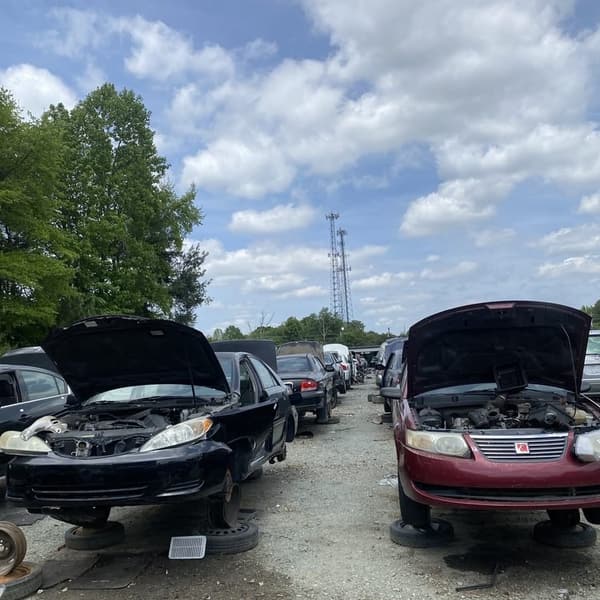
Pick Your Part - Greensboro
Hours postedA $3 fee and a signed release get you into this LKQ yard on Ward Rd, open 9 to 4:30 seven days a week.
- U-pull
- Gate $3
- Buys junk cars
- Inventory online
- Open Sundays
- Open Saturdays
-
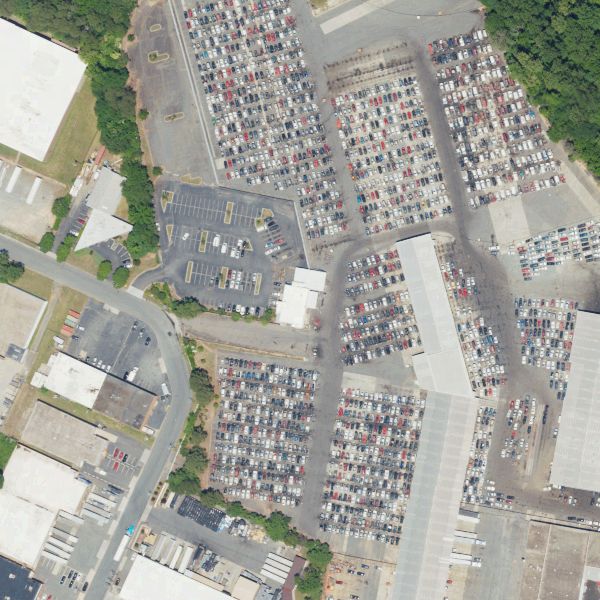
Pick Your Part - Charlotte
Hours postedSunday counts as a regular day here, with the gate open 9 to 4:30 every day of the week.
- U-pull
- Gate $3
- Buys junk cars
- Inventory online
- Open Sundays
- Open Saturdays
-
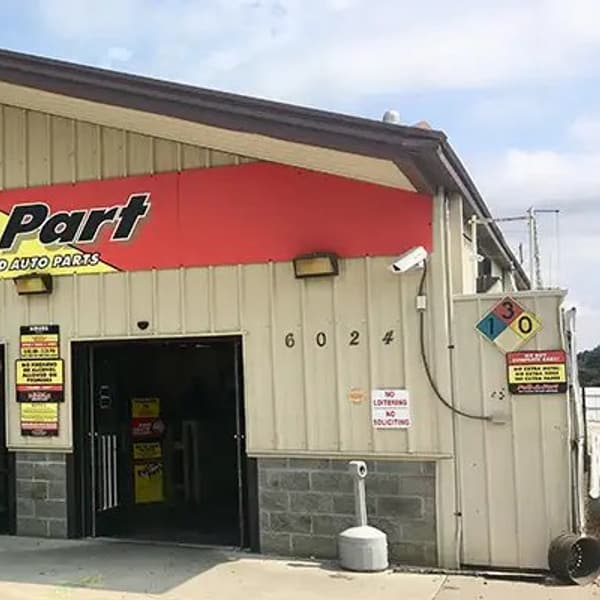
Pull-A-Part Charlotte
Hours postedAdmission runs $2 here, or $1 for VIP Club members, and everyone signs a waiver and must be 16 or older.
- U-pull
- Gate $2
- Buys junk cars
- Inventory online
- Open Sundays
- Open Saturdays
-
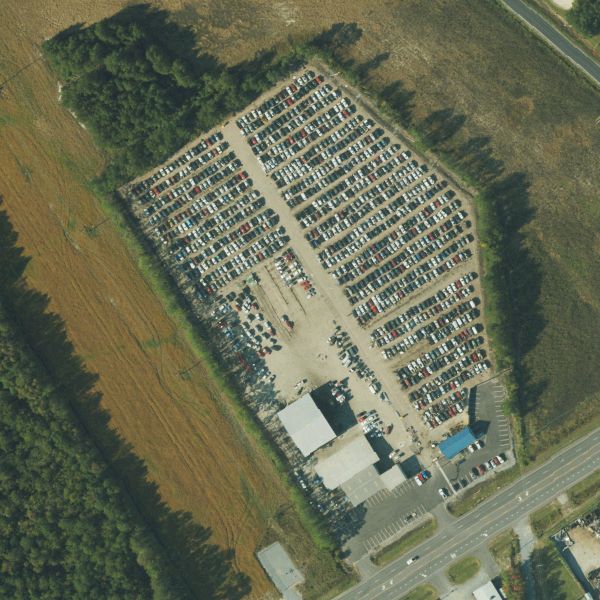
Pick Your Part - East NC
Hours postedEvery day of the week, Sundays too, this U.S.
- U-pull
- Gate $3
- Buys junk cars
- Inventory online
- Open Sundays
- Open Saturdays
-
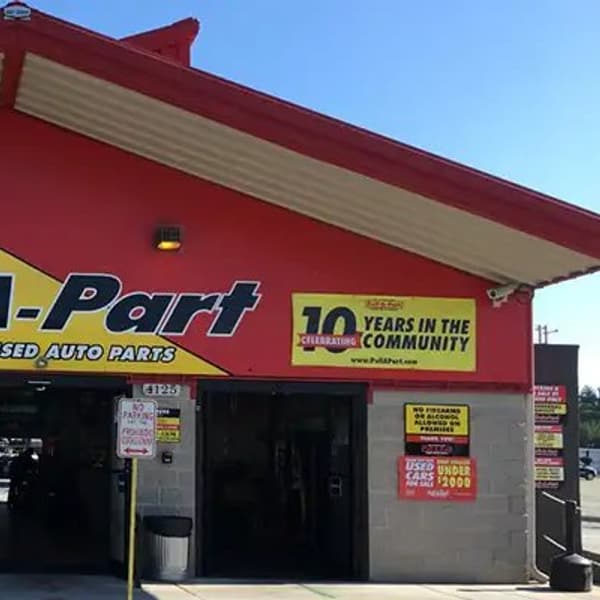
Pull-A-Part Winston-Salem
Hours postedAdmission runs $2, or $1 for VIP Club members, and everyone signs a waiver first.
- U-pull
- Gate $2
- Buys junk cars
- Inventory online
- Open Sundays
- Open Saturdays
-
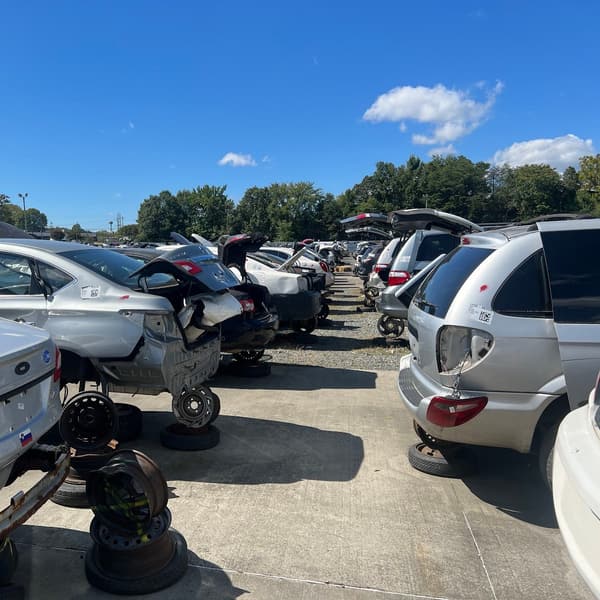
Pick Your Part - Durham
Hours postedThree dollars and a signed release get you into this LKQ Pick Your Part lot on South Miami Blvd.
- U-pull
- Gate $3
- Buys junk cars
- Inventory online
- Open Sundays
- Open Saturdays
-
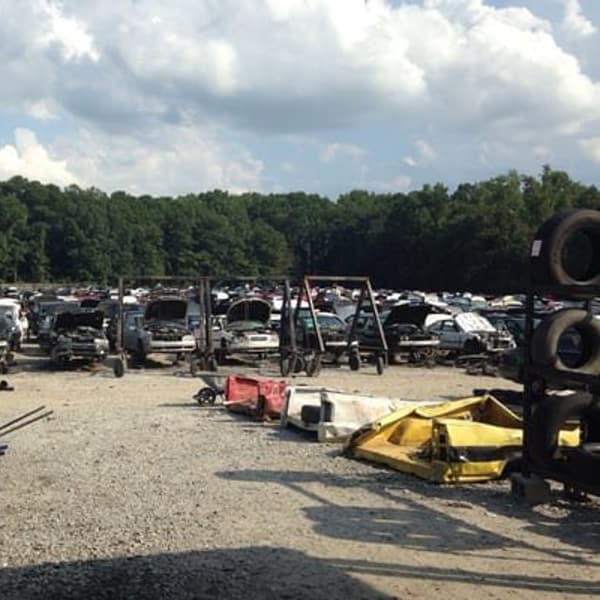
Pick Your Part - Raleigh
Hours posted- U-pull
- Gate $3
- Buys junk cars
- Inventory online
- Open Sundays
- Open Saturdays
-
RTP Pick-A-Part - Maiden, NC
Hours postedLeave the torch and the bottle jack at home.
- U-pull
- Gate $2
- Buys junk cars
- Inventory online
- Open Sundays
- Open Saturdays
No yards here match that. Turn the filter off to see them all.
Questions
Can I junk a car without a title in North Carolina?
Yes, if it is 12 model years old or older and sold only to scrap or dismantle for parts. You show a photo ID and sign statements that you can sell it, that it is at least 12 model years old and that it has no liens, and the yard checks NCDMV's online system first (North Carolina General Statutes Section 20-62.1). A newer car needs the title.
Do I need a notary?
Yes. NCDMV requires the seller's signature on a North Carolina title to be notarized.
What if I cancel insurance before turning in the plate?
NCDMV charges $50 to $150 for the lapse plus a $50 restoration fee. Surrender the plate at a license plate agency or by mail first, or move it to another car you own for $25.50.
Sources, read Oct 27, 2026
- Official NCDMV: Vehicle Titles (Title transfers; Instant titles; Replacement and duplicate titles), read 2026-10-27
- Official NCDMV: Vehicle Title & Registration Fees, read 2026-10-27
- Official NCDMV: Vehicle Title Special Cases (Bonded vehicles), read 2026-10-27
- Official NCDMV: Vehicle Documents & Forms, read 2026-10-27
- Official NCDMV: License Plates, read 2026-10-27
- Official NCDMV: Vehicle Insurance Requirements, read 2026-10-27
- Odometer Disclosure Statement (MVR-180, Rev. 04/26), read 2026-10-27
- Damage Disclosure Statement (MVR-181, Rev. 04/2026), read 2026-10-27
- Application for Duplicate Title (MVR-4, Rev. 04/26), read 2026-10-27
- Affidavit for Removal of Registered Vehicle from Vehicle Registration Files (MVR-46F, Rev. 04/26), read 2026-10-27
- License Plate Turn in Verification (MVR-18A, Rev. 4/26), read 2026-10-27
- Application for Removal of Lien from the Certificate of Title (MVR-8, Rev. 04/26), read 2026-10-27
- FAQ for Session Law 2013-323 (N.C. State Highway Patrol), read 2026-10-27
- North Carolina General Statutes Section 20-62.1, Purchase of vehicles for purposes of scrap or parts only (FindLaw copy, current as of January 1, 2023), read 2026-10-27
- North Carolina General Statutes Section 20-61, Owner dismantling or wrecking vehicle to return evidence of registration (FindLaw copy, current as of January 1, 2023), read 2026-10-27
- North Carolina General Statutes Section 20-4.01(33), Definitions (FindLaw copy, current as of January 1, 2023), read 2026-10-27
- North Carolina General Statutes Section 20-71.3, Salvage and other vehicles, titles and registration cards to be branded (FindLaw copy, current as of January 1, 2023), read 2026-10-27
- North Carolina General Statutes Section 20-109.1, Surrender of titles to salvage vehicles (FindLaw copy, current as of January 1, 2023), read 2026-10-27
- North Carolina General Statutes Section 20-311, Action by the Division when notified of a lapse in financial responsibility (FindLaw copy, current as of January 1, 2023), read 2026-10-27
- North Carolina General Statutes Section 20-58.4, Release of security interest (FindLaw copy, current as of January 1, 2023), read 2026-10-27
- North Carolina General Statutes Section 20-58.4A, Electronic lien system (FindLaw copy, current as of January 1, 2023), read 2026-10-27
- North Carolina General Statutes Section 66-421 (FindLaw copy, current as of January 1, 2023), read 2026-10-27
- North Carolina General Statutes Section 66-422, Inspection of regulated metals property and records (FindLaw copy, current as of January 1, 2023), read 2026-10-27
- North Carolina General Statutes Section 66-423, Hold notices for nonferrous metals; retention of nonferrous metals (FindLaw copy, current as of January 1, 2023), read 2026-10-27
- North Carolina General Statutes Section 66-424, Prohibited activities and transactions (FindLaw copy, current as of January 1, 2023), read 2026-10-27
- North Carolina General Statutes Section 66-425, Permissible payment methods for nonferrous metals purchasers (FindLaw copy, current as of January 1, 2023), read 2026-10-27
- North Carolina General Statutes Section 14-164.1, Possession of catalytic converter removed from a motor vehicle (FindLaw copy, current as of January 1, 2023), read 2026-10-27
- North Carolina General Statutes Section 160A-303.2, Regulation of abandonment of junked motor vehicles (FindLaw copy, current as of January 1, 2023), read 2026-10-27
- 11 NCAC 04 .0418 Total Losses on Motor Vehicles (Rules Review Commission filing, readopted with changes), read 2026-10-27
- 49 CFR 580.17 Exemptions (10-1-25 Edition), read 2026-10-27
Not legal advice
Rules change, and a county tax office can read them its own way. Call the agency or check its site before you sign a title over.