Florida
Selling a junk car in Florida
Florida wants paper. Bring the title in your name, sign it over at the yard and write in the price.
A salvage certificate or certificate of destruction in your name works too. No title? If the car is 10 model years old or older and worth under $1,000, Florida calls it derelict, and you and the yard fill out a derelict certificate on the spot with a copy of your driver license. Anything newer needs a duplicate title first.
Then pull your plate. Florida plates stay with you, and a registered car with no insurance can cost you your license and registration.
The title
Florida yards need a title in your name. A car 10 or more model years old and worth under $1,000 can go on a derelict certificate (HSMV 82137) filled out at the yard instead.
- Derelict motor vehicle (Florida Statutes Section 319.30(1)(e), (2)(c)2 and (7)(a)4.b): a car or mobile home valued under $1,000 that is at least 10 model years old, counting its model year as year one (so model year 2017 or older in 2026), whose main value is for dismantling or scrap.If no title, salvage title or certificate of destruction is available, the seller or owner, any authorized transporter, and the licensed salvage motor vehicle dealer or registered secondary metals recycler complete the Application for an Original/Duplicate Derelict Motor Vehicle Certificate and Request to Cancel Title (HSMV 82137) at the time of sale, with a legible copy of the seller's valid Florida or other-state driver license or ID card. FLHSMV charges $3 for each derelict certificate plus any service charge (Section 319.30(8)(i)).
- Derelict trailer (Section 319.30(1)(e)2): a trailer valued under $5,000 that is at least 10 model years old and whose main value is for conversion to scrap metal can use the same derelict certificate application.
- Seller who is not the owner of record (Section 319.30(1)(x), (2)(c)2 and (8)(j)): a person with physical possession of a derelict vehicle who attests that possession was obtained lawfully along with all ownership rights may sell it on the derelict application.The yard must take a smudge-free right thumbprint on the application, attach a copy of the seller's license or ID, and pay only by check or money order made payable to the seller. Towing companies, repair shops and landlords cannot use this route unless they first get a title, salvage title or certificate of destruction in their own name.
- Liens on a derelict sale (Section 319.30(2)(c)2): if FLHSMV records show no active lien or a lien 3 years old or older, the yard holds the car 3 full business days before crushing it.If an active lien is less than 3 years old, the yard holds it 10 days while FLHSMV notifies the lienholder, and a lienholder who protests in writing triggers a 30-day administrative hold.
Bring to the yard
- Bring the Florida certificate of title (or salvage certificate of title or certificate of destruction) in your name.Sign the seller transfer section on the front of the title, print the yard's name as purchaser, and enter the selling price. Tax collectors will not accept a transfer without the price, and it is illegal to transfer a title when the purchaser's name does not appear on it (Florida Statutes Sections 319.22(4) and (5), 319.225(2)).
- If the title lists co-owners joined by "and", every co-owner signs.If they are joined by "or", either co-owner can sign (Section 319.22(2)(a)1).
- Complete the odometer disclosure on the title for a model year 2011 or newer car until it is 20 years old.Model year 2010 and older cars are exempt after 10 years, so they are exempt in 2026, as are vehicles over 16,000 pounds gross vehicle rating and vehicles that are not self-propelled (Section 319.225(4)).
- No notary is needed.Section 319.22 sets no notarization requirement, and the FLHSMV forms reviewed (HSMV 82050, HSMV 82101) use a signed declaration under penalty of perjury instead.
- Bring a valid driver license or state ID card.The yard must record your name, address and ID number, and a derelict application must include a legible copy of a valid Florida or other-state driver license or ID card (Section 319.30(2)(c), (6) and (7)).
- If your title is electronic, have it printed before the sale (a tax collector office can print it; Flagler County charges $2.50 by mail), or go with the buyer to a tax collector office or license plate agency to sign a secure reassignment document that records the odometer reading (Section 319.225(7)).
- If the title shows a lien, bring the lienholder's lien satisfaction.With an electronic lien, the satisfaction is sent to FLHSMV electronically and a clear title is then issued to the owner (Section 319.24(5) and (8)).
- No title and the car qualifies as derelict: complete HSMV 82137 together with the yard at the time of sale.If you are not the owner of record, expect to give a right thumbprint and to be paid by check or money order.
- A bill of sale is optional when you sign over a title.Form HSMV 82050 (Notice of Sale and/or Bill of Sale) works as a bill of sale when the seller and purchaser complete sections 1, 2 (when applicable) and 3. Keep a copy of every document you sign.
- Remove your license plate before the yard takes the car (Section 320.0609(2)(a)).
- Leave the catalytic converter on the car.Only a registered secondary metals recycler may buy a detached converter, and selling a detached converter without proof of ownership is a felony, while a converter sold as part of the vehicle is not restricted (Sections 860.142 and 538.26(5)(b)13).
After the car leaves
| Step | Form | Deadline | Fee |
|---|---|---|---|
| File a notice of sale.Complete the notice of sale section on the back of your Florida title or form HSMV 82050 and submit it to a county tax collector office (or FLHSMV). Filing protects you from civil liability for later operation of the car (Section 319.22(2)(a)). | Notice of Sale and/or Bill of Sale for a Motor Vehicle, Mobile Home, Off-Highway Vehicle or Vessel (HSMV 82050), or the notice of sale section on the back of the Florida title | Within 30 days after the sale (Florida Statutes Section 319.22(2)(b)). The statute exempts sales to a licensed motor vehicle dealer, but filing still limits your civil liability (Section 319.22(2)(a)2). | No fee is set in Section 319.22, and the county pages reviewed list none. |
| Remove your license plate and either transfer it to a replacement vehicle or surrender it to a county tax collector office in person, by mail or by drop box.The office cancels the plate and gives or mails you a receipt. | No statewide form in the sources reviewed. Counties use their own surrender form or a signed statement (for example Lee County's Surrender License Plate form; Flagler County asks for a signed statement and a copy of your photo ID when you mail a plate). | Remove the plate at the sale (Section 320.0609(2)(a)). Sarasota County says to surrender it if you will not put it on a replacement vehicle within 30 days. | No surrender fee is listed in the county pages reviewed. Transferring the plate to another vehicle costs a $4.50 transfer fee (Section 320.0609(2)(a)) plus local service charges. |
| End the registration by turning in the registration certificate with the plate.The registration stays in your name until the plate is transferred or surrendered. | No form; done with the plate surrender | No separate deadline; it happens when you surrender the plate. | No fee stated in the sources reviewed. |
| Cancel the car's PIP and property damage liability insurance only after the plate is surrendered or moved to another car.Insurers report cancellations to FLHSMV, and FLHSMV suspends the driver license and registration of an owner whose registered vehicle lacks the required insurance. | No form | Surrender the plate before the policy ends. Insurers report a cancellation to FLHSMV within 10 days (Section 324.0221(1)(a)). | No fee to cancel. If you are suspended, reinstatement costs $150 the first time, $250 the second time and $500 for each later reinstatement within 3 years (Section 324.0221(3)). |
| Keep copies of the signed title or derelict application, the notice of sale and the plate surrender receipt.Until you surrender the plate you are responsible for any unauthorized use of it (Flagler County), and Lee County warns that tolls and red-light camera notices from a misused plate go to the name and address on file. | No form | None set | None |
| If you sold without a title on a derelict application, the yard files HSMV 82137 with FLHSMV, and FLHSMV issues a derelict motor vehicle certificate and marks the title record canceled.Keep your copy of the application. | Application for an Original/Duplicate Derelict Motor Vehicle Certificate and Request to Cancel Title (HSMV 82137) | The yard notifies FLHSMV electronically or delivers the original application within 24 hours after receiving the vehicle (Section 319.30(2)(c)2). | $3 per derelict certificate plus any service charge (Section 319.30(8)(i)). The statute does not say whether the seller or the yard pays it. |
| If you dismantle or scrap the car yourself instead of selling it to a licensed yard, surrender the title to FLHSMV so the title record is canceled.Knowingly failing to do so is a second-degree misdemeanor. | No form named in the statute | No deadline stated (Section 319.30(2)(a)) | No fee stated |
Plates
Florida plates belong to the owner, not the car: the plate and registration stay in your name and can move to another vehicle you own in the same class (Florida Statutes Section 320.0609(1)). When you sell or scrap the car, remove the plate and either transfer it to a replacement vehicle ($4.50 transfer fee) or return it to a county tax collector office, which accepts plates in person, by mail or by drop box and issues a receipt. Surrender the plate before you cancel insurance, because a registered vehicle without PIP and property damage liability coverage leads to suspension of your driver license and registration (Section 324.0221).
Lost title
The owner, or the lienholder if a lien is recorded, signs and swears to HSMV 82101 and files it with a county tax collector office with proof of identity (Section 319.29(1)); Marion County says only the lienholder may apply while a lien is outstanding. Section 319.29(4), in effect since July 1, 2026, lets the tax collector issue the duplicate at its office or mail it to you. Fast title service must issue the title within 5 working days (Section 319.323). Include proof of address if your address differs from FLHSMV records, and expect the new title to be marked "duplicate copy" (Section 319.29(1) and (5)). With a lien, FLHSMV sends the lien electronically to the first lienholder and may wait to issue a title until the last lien is satisfied (Section 319.24(8)). On a paper title, the lienholder must send the lien satisfaction and title within 10 working days after final payment, and if it cannot provide the title it must give you a lien satisfaction and pay for a duplicate (Section 319.24(5)(a)). An electronic title with no lien can be printed through a tax collector ($2.50 by mail in Flagler County) or requested online through the FLHSMV MyDMV Portal ($4.50; Flagler County says it arrives in about 3 to 4 weeks).
Application for Duplicate or Lost in Transit/Reassignment for a Motor Vehicle, Mobile Home or Vessel Title Certificate (HSMV 82101), By statute, a duplicate title costs $70 plus a $1 security fee (Florida Statutes Section 319.32(1)) and a $4.25 service charge kept by the tax collector (Section 319.32(2)), plus $2.50 for each paper title FLHSMV mails; a tax collector branch office may add up to 50 cents (Section 320.04(1)(c)). Expedited (fast title) service adds $10 (Section 319.323). County totals vary: Marion County lists $75.75 if the duplicate stays electronic, $2.50 more to print it and $10 more for fast title; Okaloosa County lists $78.25 (title mailed from Tallahassee in about 7 to 10 business days) or $85.75 (printed and mailed by the county within 24 to 48 hours). There is no fee to reissue a title lost in the mail if you apply within 180 days of its issue date (Section 319.29(3)).
Salvage and totaled
Under Florida Statutes Section 319.30(3)(a), a car is a "total loss" when an insurer pays the owner to replace it (or pays a theft claim) or, if uninsured, when the repair cost is 80 percent or more of the cost to replace it with one of like kind and quality. If the insurer and owner agree to repair it and the actual repair cost exceeds 100 percent, the owner must ask FLHSMV within 72 hours to brand the title "Total Loss Vehicle". The owner (including a self-insured owner) must send the title to FLHSMV within 72 hours after the car becomes salvage; an insurer that pays a total loss must get the title, notify NMVTIS and send the title to FLHSMV within 72 hours after receiving it (Section 319.30(3)(b)). If you keep the car in the settlement, you (within 72 hours) or the insurer (within 72 hours after receiving the title) must send the title in, FLHSMV issues the salvage certificate of title or certificate of destruction directly to you, and you may not dispose of the car (for example, sell it to a yard) until you have it. The application form is HSMV 82363 (Application for Salvage Title/Certificate of Destruction). A late model car (model year 7 years old or newer) worth at least $7,500 gets a certificate of destruction when repairs equal 90 percent or more of retail value, and a car worth under $7,500 or not late model gets one when its only remaining value is parts or scrap (Section 319.30(3)(c)).
Title brands: Salvage certificate of title: issued for a total loss vehicle that may be rebuilt; FLHSMV charges $2 for it (Florida Statutes Sections 319.30(1)(t) and (u), 319.32(1))., Certificate of destruction: declares the vehicle unrebuildable and authorizes dismantling or destruction; it can be reassigned at most two times, and FLHSMV may not issue a certificate of title for that vehicle (Section 319.30(3)(c)). Towing and storage lien sales also produce certificates of destruction (Section 319.30(1)(a))., Total Loss Vehicle: brand the owner must request within 72 hours when an insurer and owner agree to repair a car whose actual repair cost exceeds 100 percent of its replacement cost; it becomes part of the title history (Section 319.30(3)(a)2)., Insurance-declared total loss: brand added with a salvage rebuildable title when an insurer finds a totaled vehicle with custom-lowered floors or a wheelchair lift repairable (Section 319.30(3)(c))., Rebuilt: after a salvage vehicle is rebuilt and passes FLHSMV's physical examination, the title carries words stating that the vehicle has been rebuilt (Section 319.14(1)(b))., Derelict motor vehicle certificate (a certificate, not a title brand): evidence that a derelict vehicle will be dismantled or scrapped; FLHSMV marks the title record canceled (Section 319.30(1)(f) and (8)(i))..
What the yard has to do
- Salvage motor vehicle dealers must hold a Florida motor vehicle dealer license in the salvage class (Florida Statutes Section 320.27(1)(c)5 and (2)).Secondary metals recyclers must register each fixed location with the Florida Department of Revenue ($6 per location, renewed each October 1), display the registration, and not dispose of property until any holding period has expired (Section 538.25).
- Before buying a vehicle, the yard must get a valid certificate of title, salvage certificate of title or certificate of destruction in the seller's name or properly endorsed to the seller (a recycler may also accept a derelict motor vehicle certificate reassigned by a licensed salvage dealer) and must make the required NMVTIS notification.Knowingly skipping these steps is a third-degree felony (Section 319.30(2)(b), (2)(c) and (7)(a)4).
- The yard records the purchase date and the seller's name, address and driver license or ID card number (Section 319.30(2)(c), (6)(a) and (7)(a)).
- For a derelict sale without a title, the yard completes the derelict application with the seller at the time of sale, attaches a legible copy of the seller's license or ID, takes a smudge-free right thumbprint if the seller is not the owner of record, notifies FLHSMV electronically or delivers the original application within 24 hours, and holds the vehicle 3 full business days (no lien, or a lien 3 years or older) or 10 days (active lien under 3 years) before crushing it (Section 319.30(2)(c)2 and (7)(a)4.b).
- Payment for a derelict vehicle sold by someone other than the owner of record must be by check or money order payable to the seller, never to the transporter, and the yard may not cash the check it issued (Section 319.30(8)(j)).
- Yards return titles and salvage titles to FLHSMV monthly (or notify FLHSMV electronically) and keep originals or copies of all title documents and required records for 3 years in chronological order (Section 319.30(8)(a) and (b)).
- When FLHSMV or police believe a vehicle is stolen or fraudulently titled, they may order the yard to hold it for up to 5 additional business days (Section 319.30(8)(d) and (e)).For nonferrous regulated metals, a police hold notice lasts 15 calendar days and an extended hold notice 45 calendar days (Section 538.21).
- Secondary metals recyclers keep paper and electronic records of every regulated metals purchase on the FDLE-approved form, including the seller's ID number, a signed ownership statement, a right thumbprint, the seller's vehicle tag number and photos of the seller and the metal; they send the electronic record to local law enforcement by 10 a.m. the next business day and keep records 3 years (Section 538.19(1) to (4)).
- A recycler that crushes a vehicle bought from a salvage dealer or another recycler must get the seller's signed statement that the title was surrendered to FLHSMV (Section 538.19(5)).
- No cash over $1,000 for regulated metals property, and no cash at all for restricted regulated metals property such as a detached catalytic converter; those payments go by check mailed to the seller's street address (not a post office box) or by electronic payment within 3 days.Cash payments are rounded up to the nearest nickel if the 1-cent piece is no longer produced (Section 538.235).
- Recyclers may not buy metals before 7 a.m. or after 7 p.m., away from a fixed location, from a seller under 18, using a false name or visibly impaired, or when the metal did not arrive in a motor vehicle (Section 538.26(1) to (4)).
- Restricted items, including a catalytic converter not purchased as part of a vehicle and more than two lead-acid batteries from the same person in one day, require reasonable proof of ownership such as a receipt or bill of sale (Section 538.26(5)).A purchased detached catalytic converter must stay at the yard unprocessed for 10 business days unless it came from another recycler, a salvage motor vehicle dealer or an exempt seller (Section 538.26(6)).
Catalytic converters
Florida's Catalytic Converter Antitheft Act, enacted by CS/CS/SB 306 (Chapter 2023-114, Laws of Florida, effective July 1, 2023), created Florida Statutes Section 860.142: only a registered secondary metals recycler may knowingly buy a detached catalytic converter, the recycler must follow the records rules in Section 538.19 and the proof-of-ownership rules in Section 538.26(5), and anyone who knowingly possesses, buys, sells or installs a stolen converter, or a detached converter without proof of ownership, commits a third-degree felony (registered recyclers, salvage motor vehicle dealers and sellers exempt under Section 538.22 are excepted from the proof-of-ownership offense only). Possessing two or more detached converters without a satisfactory explanation allows an inference that the person knew they may have been stolen. The same act made importing, selling or installing a counterfeit, fake or nonfunctional converter a second-degree felony (Section 860.147) and added Section 538.26(6), which bars a recycler from processing or removing a purchased detached converter for 10 business days. A converter purchased as part of a whole vehicle is not restricted (Section 538.26(5)(b)13), and restricted metals cannot be paid for in cash (Section 538.235).
What Florida yards pay
$158 to $190 a ton
That is what Florida yards and price trackers published for whole cars, newest figure Sep 2026. A ton here is 2,000 lb.
| Car | Curb weight | Scrap weight estimate |
|---|---|---|
| compact car, like a 2010 Honda Civic | 2,754 lb | About $220 to $260 |
| midsize sedan, like a 2010 Honda Accord | 3,269 lb | About $260 to $310 |
| SUV, like a 2010 Honda Pilot | 4,319 lb | About $340 to $410 |
| full-size pickup, like a 2021 Ford F-150 | 4,465 lb | About $355 to $425 |
An estimate from weight, not an offer. A yard pays more for a complete car with the converter on it, and takes out towing and missing parts.
- iScrap App report, Orlando, Florida: $9.50 per 100 lb, Jul 2026
- Clunqr, a junk car buyer, survey of Florida yards: $165 per ton in its state table; $158 to $168 per ton in its calculator, Sep 2026
Per-car claims, kept separate from the range
- JunkUrCar.com price index of instant offers from its buyer network: Median offer $425; middle half $325 to $625; 1,627 offers from March 2022 to October 2026 (Oct 2026)
- Clunqr: $165 to $330 for a complete car of 2,000 to 6,000 lb (Sep 2026)
Yards that buy cars
245 yards in Florida say they buy cars or hold a license to buy salvage vehicles.
- Orlando 22
- Tampa 19
- Jacksonville 19
- Opa Locka 13
- Pensacola 6
- Auburndale 6
- Apopka 6
- Ocala 5
- Lakeland 5
- Hollywood 5
- Miami 5
- Hialeah 4
- Plant City 4
- Bradenton 3
- West Palm Beach 3
- Clearwater 3
Florida yards that buy cars
8 yards-
Pick Your Part - Bradenton
Hours postedPay $3 at the gate after signing a release.
- U-pull
- Gate $3
- Buys junk cars
- Inventory online
- Open Sundays
- Open Saturdays
-
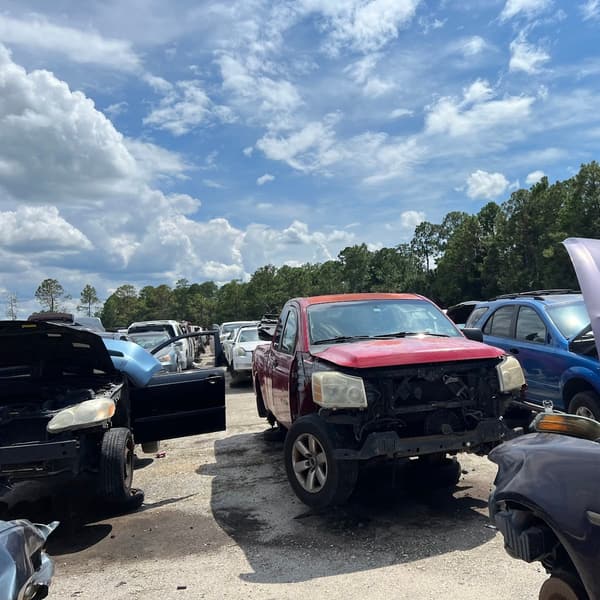
Pick Your Part - Daytona
Hours postedThree dollars and a signed release get you into this LKQ Pick Your Part lot on W International Speedway Blvd.
- U-pull
- Gate $3
- Buys junk cars
- Inventory online
- Open Sundays
- Open Saturdays
-
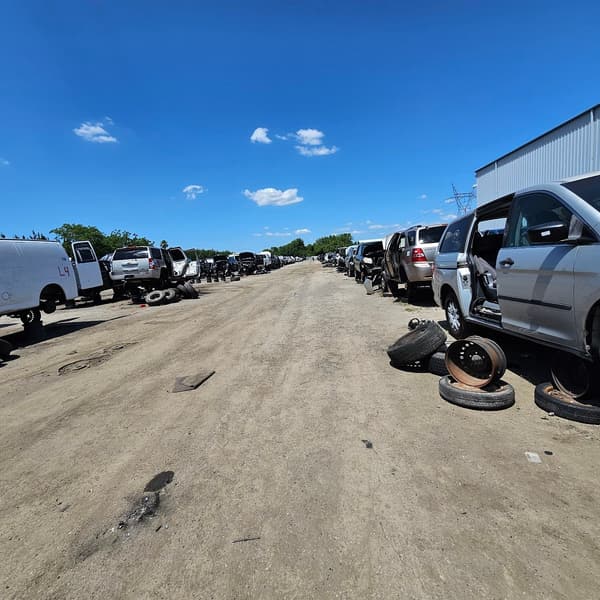
Pick Your Part - Orlando
Hours posted- U-pull
- Gate $3
- Buys junk cars
- Inventory online
- Open Sundays
- Open Saturdays
-
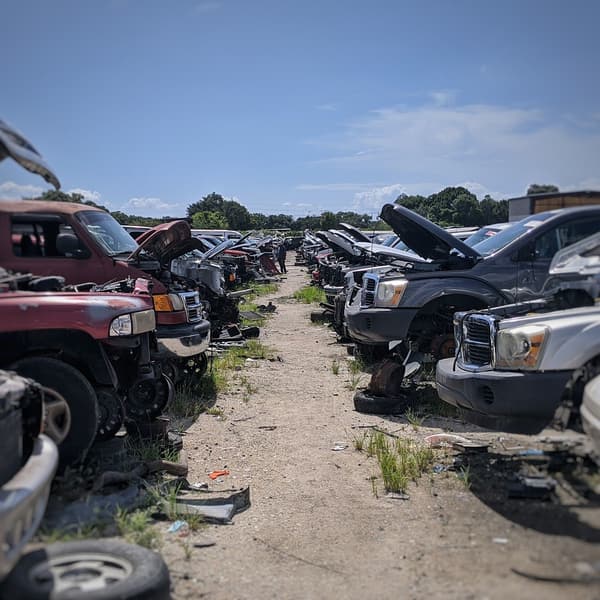
Pick Your Part - Tampa
Hours postedEvery day of the week, Sunday included, this Causeway Blvd LKQ yard lets customers in from 9 to 4:30.
- U-pull
- Gate $3
- Buys junk cars
- Inventory online
- Open Sundays
- Open Saturdays
-
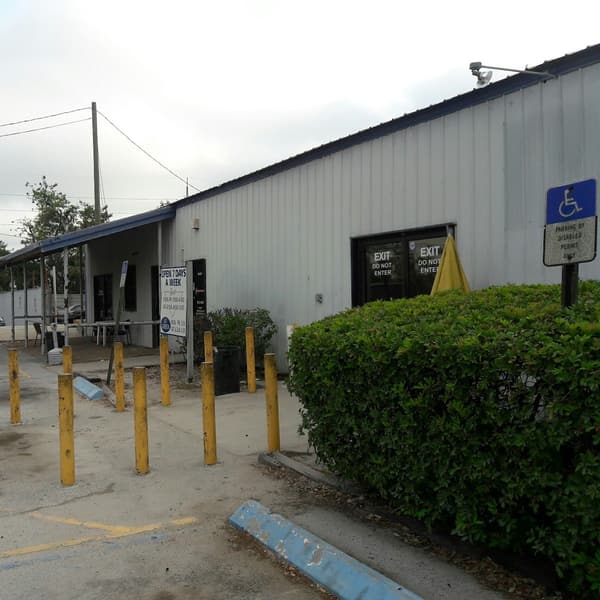
Pick Your Part - Clearwater
Hours postedAdmission at this LKQ Pick Your Part on 40th Street North runs $3, paid after you sign a release at the gate.
- U-pull
- Gate $3
- Buys junk cars
- Inventory online
- Open Sundays
- Open Saturdays
-
Pick Your Part - Gainesville
Hours postedThree dollars and a signed release get you into this LKQ Pick Your Part lot on NW 13th St.
- U-pull
- Gate $3
- Buys junk cars
- Inventory online
- Open Sundays
- Open Saturdays
-
Pull-A-Part West Palm Beach
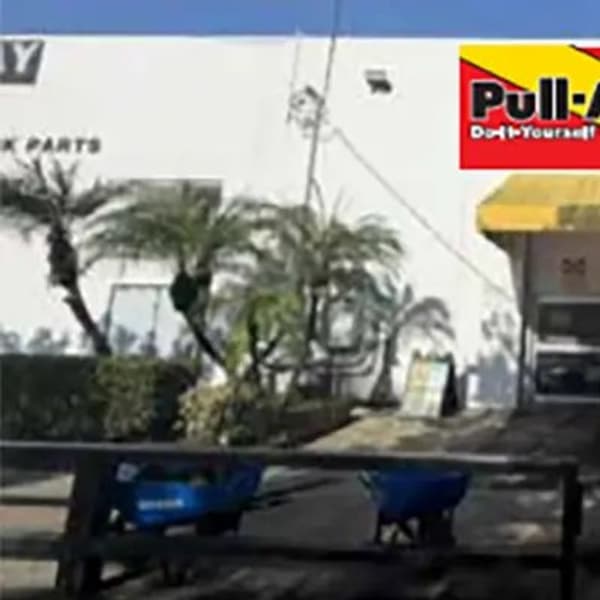
Hours postedThree dollars gets you through the gate, two if you're in the VIP Club, and you sign a waiver first.
- U-pull
- Gate $3
- Buys junk cars
- Inventory online
- Open Sundays
- Open Saturdays
-
Pick Your Part - Largo
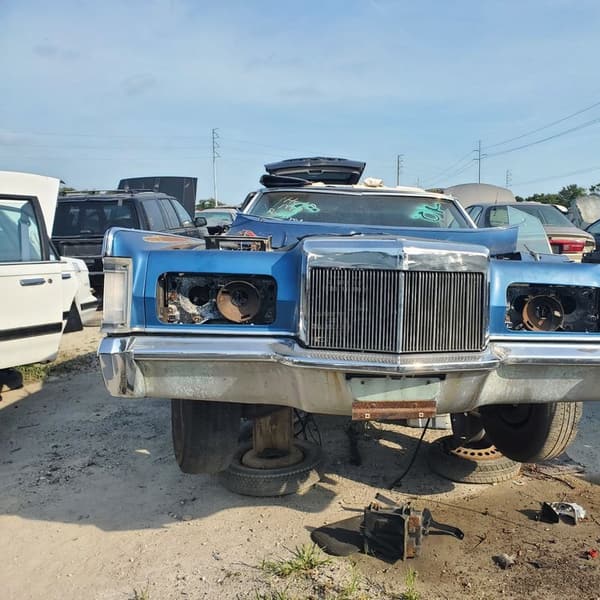
Hours postedPack your own wrenches and leave the jack behind, since every car on this LKQ lot already sits propped up.
- U-pull
- Gate $3
- Buys junk cars
- Inventory online
- Open Sundays
- Open Saturdays
No yards here match that. Turn the filter off to see them all.
Questions
Can I junk a car without a title in Florida?
Only if it is at least 10 model years old and worth under $1,000. Florida law calls that a derelict motor vehicle (in 2026, model year 2017 or older). You, the yard and anyone towing it complete form HSMV 82137 at the sale, with a copy of your driver license, and FLHSMV charges $3 for the certificate. A newer car needs a title, so order a duplicate on form HSMV 82101 first.
What do I do with my plate?
Take it off before the car leaves. Florida plates belong to you, not the car. Move it to your next car for $4.50 or turn it in at a county tax collector office, and do that before you cancel insurance.
Do I have to report the sale?
File a notice of sale on the back of the title or on form HSMV 82050 within 30 days. It protects you from liability for whatever happens with the car later.
Can I sell the catalytic converter separately?
Only to a registered secondary metals recycler, and you need proof you own it. Florida's 2023 Catalytic Converter Antitheft Act made selling a detached converter without proof of ownership a felony. A converter still bolted to a car you sell whole is not restricted.
Sources, read Oct 27, 2026
- 319.30 Definitions; dismantling, destruction, change of identity of motor vehicle, vessel, or mobile home; salvage (2026 Florida Statutes), read 2026-10-27
- 319.22 Transfer of title (2026 Florida Statutes), read 2026-10-27
- 319.225 Transfer and reassignment forms; odometer disclosure statements (2026 Florida Statutes), read 2026-10-27
- 319.24 Issuance in duplicate; delivery; liens and encumbrances (2026 Florida Statutes), read 2026-10-27
- 319.29 Lost or destroyed certificates (2026 Florida Statutes), read 2026-10-27
- 319.32 Fees; service charges; disposition (2026 Florida Statutes), read 2026-10-27
- 319.323 Expedited service; applications; fees (2026 Florida Statutes), read 2026-10-27
- 319.14 Sale of motor vehicles registered or used as taxicabs, police vehicles, lease vehicles, rebuilt vehicles, nonconforming vehicles, custom vehicles, or street rod vehicles; conversion of low-speed vehicles (2026 Florida Statutes), read 2026-10-27
- 320.04 Registration service charge (2026 Florida Statutes), read 2026-10-27
- 320.0609 Transfer and exchange of registration license plates; transfer fee (2026 Florida Statutes), read 2026-10-27
- 320.02 Registration required; application for registration; forms (2026 Florida Statutes), read 2026-10-27
- 324.0221 Reports by insurers to the department; suspension of driver license and vehicle registrations; reinstatement (2026 Florida Statutes), read 2026-10-27
- 627.733 Required security (2026 Florida Statutes), read 2026-10-27
- 320.27 Motor vehicle dealers (2026 Florida Statutes), read 2026-10-27
- 538.19 Records required; limitation of liability (2026 Florida Statutes), read 2026-10-27
- 538.21 Hold notice (2026 Florida Statutes), read 2026-10-27
- 538.235 Method of payment (2026 Florida Statutes), read 2026-10-27
- 538.25 Registration (2026 Florida Statutes), read 2026-10-27
- 538.26 Certain acts and practices prohibited (2026 Florida Statutes), read 2026-10-27
- 860.142 Catalytic Converter Antitheft Act (2026 Florida Statutes), read 2026-10-27
- Chapter 2023-114, Laws of Florida (CS/CS/SB 306, catalytic converters), read 2026-10-27
- Chapter 2024-218, Laws of Florida (CS/SB 1350, salvage), read 2026-10-27
- Chapter 2024-272, Laws of Florida (CS/CS/SB 736, services provided by the Department of Highway Safety and Motor Vehicles or its agents), read 2026-10-27
- Chapter 2025-125, Laws of Florida (CS/CS/HB 961, Department of Highway Safety and Motor Vehicles), read 2026-10-27
- Chapter 2026-68, Laws of Florida (CS/SB 1074, the one-cent piece), read 2026-10-27
- Flagler County Tax Collector surrender plate by mail letter with HSMV 82050 (Rev. 03/21), read 2026-10-27
- Surrendering a License Plate, Flagler County Tax Collector, read 2026-10-27
- Motor Vehicle Titles, Flagler County Tax Collector, read 2026-10-27
- Selling Your Vehicle, Sarasota Tax Collector, read 2026-10-27
- Sold Your Vehicle? Surrender License Plate, Lee County Tax Collector, read 2026-10-27
- Duplicate Titles, Marion County Tax Collector, read 2026-10-27
- Duplicate Title Packet, Okaloosa County Tax Collector, read 2026-10-27
- Marion County Tax Collector Dealer Newsletter, September 2010, read 2026-10-27
- HSMV 82363 Application for Salvage Title/Certificate of Destruction (Rev. 09/06), Marion County Tax Collector copy, read 2026-10-27
- 705.101 Definitions (2026 Florida Statutes), read 2026-10-27
Not legal advice
Rules change, and a county tax office can read them its own way. Call the agency or check its site before you sign a title over.